
A narrow river of slush rushes along the curb. On the boulevard, patches of dirty snow sit in shady places. Among the sticks that will soon become lilac hedges, we see soggy, crumbled potato chip bags—free for the taking. Colleen collects them for a kids’ TV show. You can use them to bid on prizes. The ten-cent ones are ten points, the small ones five. She plans to win the pink bike with rainbow streamers and use it to escape her bungalow. When that happens, many other things will change. Even her short brown hair will grow long enough for a ponytail.
Colleen’s father eats steak, while they have Spam. Her brother has a missing rib from protecting Colleen’s mother. Colleen’s father punched him in the chest and then refused to take him to the hospital. Whenever her brother cuts the grass, he removes his shirt, and you can see the indentation in his side. Her other brother bumped me off the teeter-totter once. He had just returned home from youth detention, a one-year sentence for reaching for a knife to guard Colleen’s mother.
On Saturday, the telephone rings. The noise jangles through a newly cleaned house that smells of floor wax.
“Come over,” Colleen says, leaving me puzzled. I am not allowed inside her house. Those are her mother’s rules. One time, I stood at the screen door and looked up the back stairs into the kitchen where a red-and-white cloth covered the table. Colleen’s mother had layered triangle lunch sandwiches in a perfect arrangement that told me she expected life to be better than broken ribs and shame. Sometimes I see her walking from the bus stop in sunglasses that cover her black eyes.
“You have to come over,” Colleen insists.
When I arrive, the door is open. “My mother’s gone,” she tells me. “A note came in the mail. It was from my dad’s girlfriend Dana. It said, ‘Has the bitch left yet? As soon as she leaves, I am ready to move in.’ She’s going to have a baby, and she’s moving in, and my mom left today.”
All of a sudden, Colleen is an orphan, or half an orphan. She doesn’t cry, just stands still like a piece of steel. In the weeks that follow, we spend hours on the brown sofa not far from the mail slot where the letter had slipped in and landed on the hardwood. Colleen’s father and his new wife kiss in the doorway, while we watch TV, cringe and try not to look at the disgusting display of inappropriate affection. We lose ourselves in black and white movies, Bugs Bunny and Roadrunner cartoons and the Saturday afternoon shows, like Top 10 Hit Parade, with the latest songs and dances.
All day, Dana keeps her hair in big rollers held in place with plastic sticks, concealed under a special pink net. The costume makes her head much too large for her barely pregnant body. At the end of the day before Colleen’s father comes home, she prepares in the bathroom, pulling out the curlers, backcombing the strands and stiffening them with spray, usually with a cigarette resting on the sink corner. Perfume and tobacco fumes spill down the hallway, while in the spare bedroom, piles of crumpled laundry lay unironed. Colleen’s brothers move to their own apartments or basement suites. Outside, the backyard grass grows so high the dog disappears, its black head bobbing in the wavy sea of green.
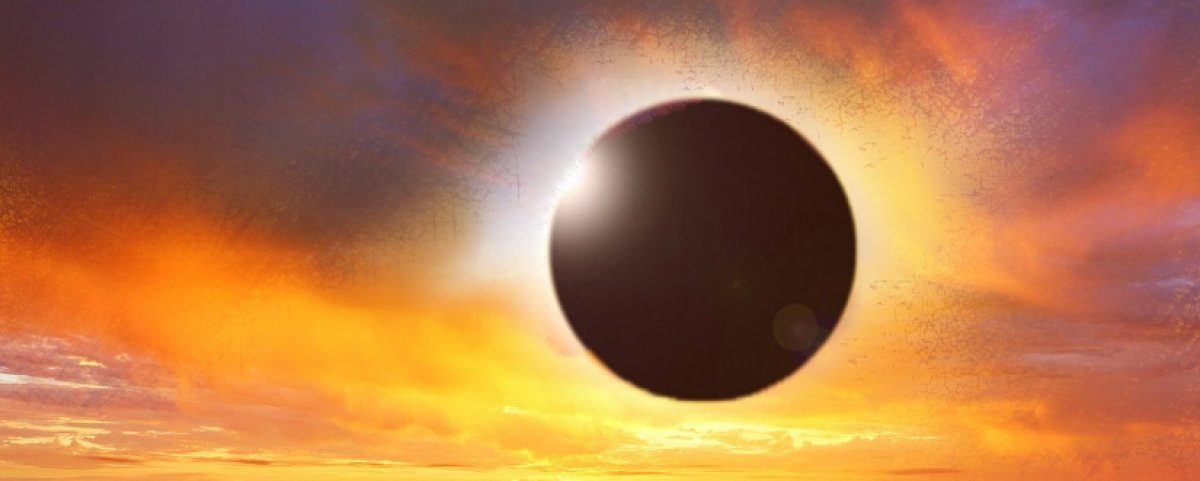
On July 20, 1963, I go to Colleen’s to watch the eclipse. At noon, the moon will pass between the sun and earth, and the world will darken completely—a phenomenon that will not repeat itself here during our lifetimes. The kitchen table is a mess of bowls, measuring cups, spoons, flour and batter. Colleen’s father, dressed in a blue shirt, sleeves rolled up, has baked a chocolate cake, it seems, and is covering it with icing. He warms the knife under the hot water tap, then swirls on the chocolate spread.
Outside, he continues the preparations. He pushes the mower. The blades slice the grass to clear some space. He unscrews the bedroom dresser mirror, carts it outside and leans it against the picnic table. All week in Peanuts, Linus has warned Charlie Brown and Lucy not to look directly at the eclipse. “Sunglasses, smoked glass, photographic negatives…even welder’s glasses aren’t safe for directly viewing an eclipse,” Linus says. “It’s very dangerous….You could suffer severe burns of the retina from infra-red rays.” But Dana and Colleen’s father don’t read the comics. They sit on folding chairs, eat cake and stare into the mirror.
The moon blocks the sun, first only slightly, then entirely. The day turns pale blue then navy and finally blacker than night because there are no stars or streetlights. Even the birds stop singing. When the light returns, everything is bright and slow. Giant aphids scale the tall crabgrass and peony stalks. Woodpeckers hack loudly at the stucco. Parades of ants lumber along the telephone lines.
I don’t know if Colleen’s father and Dana suffered permanent damage. A few days later, Colleen put everything she had into her little suitcase and rode the train to live with her mother. She didn’t bother with the potato chip bags. The collection was just empty packages now, throwaways thoughtlessly discarded, the way people do. Before she took the bus to the train station, we shared a blue Popsicle on the front step, the cold sugar, melting slowly in our mouths.