
The Thing That's Wrong With Me
by Terese Brasen
Prism International
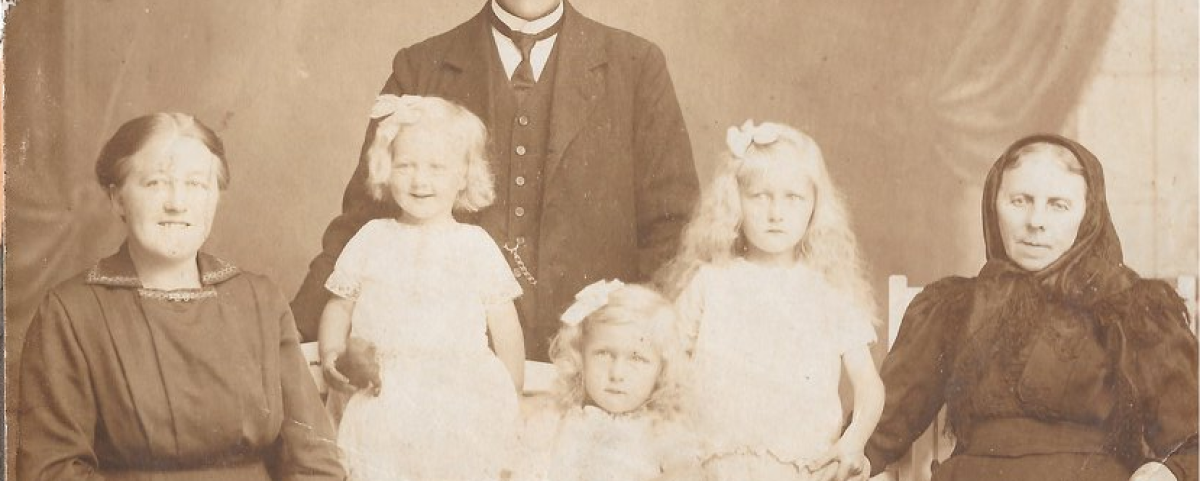
1946 Horsens Denmark. Once upon a time in the land of Hans Christian Andersen, Ingrid began a new day. She was an ordinary-looking Danish girl with a slightly crooked front tooth, the consequence of having a very small mouth. Although no one spoke of it, they all knew the defect resulted from inbreeding. The farmers who had lived for hundreds of years in remote parts of the country often had no choice but to marry their cousins.
Ingrid was born about 200 kilometres from Horsens in a long medieval farmhouse–the plaster white like icing sugar, the roof blood red. Trees fenced in the fields, standing tight against each other, their branches intertwined to guard the land from the fierce, unpredictable winds that rip and yell.
“Watch the way they bend,” Ingrid’s mother would say about the crooked trunks. “This place will deform you too.”
This part of Denmark–Jutland–is named after the Jutes, the Vikings who invaded Britain in the late fourth century. Long ago, Ingrid’s ancestors traded in their hammers for crucifixes, although many inhabitants still hold onto their pagan beliefs. Ingrid’s mother still cursed the Viking goddess Freyja. “Oh for seven black male cats with night eyes,” she would say, calling to the goddess who flew across the sky with her felines.
Her mother was a shaman of sorts, the kitchen counter an altar, where wild fermenting yeast (always alive) bubbled in a ceramic bowl. Every day, she kneaded sourdough into hearty loaves that cooled on the wide window sills, the fragrance wafting over the fields where wild rye has always grown. Viking warriors worshipped the grain. Mould grows on the stalks. Taste it, and you will become a fearless berserker.
Ingrid was born in 1917, so her trips to the Jutland Asylum, also known as the Curative Institution for the Insane, would have taken place in the 1920s. Her family took the buggy into town and then the train to visit Ingrid’s two cousins. Both had thick black brows, square jaws and black hair pulled up and piled on top.
“Why bother?” Ingrid would ask.
“Because we’re family,” her mother would answer, showing her Christian side. “And the sick aren’t particular. They’re happy with any company.”
Often they sat outside in the fresh air away from the smell, which reminded Ingrid of rotten potato water. The stone terrace was uneven. The spindly metal chairs with heart-shaped backs were unsturdy. Ingrid and her sisters would leave their too sweet apple juice on the tilting table, while their mother’s coffee threatened to spill. The afternoons often ended with a scene, with one of the women slapping someone or going into hysteria.
Before the Jutland Asylum opened in 1852, madmen went to the old monastery at Our Lady’s Church. Some survived in wooden boxes about one-and-a-half square metres, each with a bed and toilet and a small hole to let in light and some fresh air. In a report from 1792, a warden described a raving madman who had broken the box five times. The monastery then made him a special cage with brick walls four-feet thick.
Change started in England. A British psychiatrist, J.C. Pritchard, wrote a book in 1835. In 1842, a Danish doctor, Harald Selmer, translated it. A few years later, he published a paper: “General principles of the organisation of the psychiatric system.” The paper led to the opening of the Jutland Asylum in 1852, with Selmer (the founder of modern Danish psychiatry) as head psychiatrist.
The key word was “curative.” Dr. Selmer thought madness was fixable. Although he believed in healing, the hospital had a large ward for incurables, Ingrid’s two cousins among the in-patients.
In 1878, after 25 years with the asylum, Selmer wrote a report, where he stated that nearly half of all mental illnesses are psychological. Concerns and fears and continuous nagging can trigger mental illness and lead to abnormal brain processes.
He listed the causes of mental illnesses, among them:
- Neglected, deprived childhood
- Foolishness, spoiled in upbringing
- Spiritual overexertion, reading for an exam, devouring a novel, studies at folk high schools
- Religious awakening
- A broken heart, jealousy
- Extramarital child birth
- Loss of children and other close relatives
- Marital and domestic sorrows
- Loss of money, bankruptcy or other financial misfortunes
- Loss of employment, economic decline
- Idleness, unsettledness and aimless life
_______
On that morning in 1946 in Horsens, the window to Ingrid’s room was open about an inch. The morning breeze carried the scent of the fjord. The sea air invited her to join the lively noise already beginning on the streets. But Ingrid felt a lingering gloom. She knew she had dreamed vividly. Although the details were already gone, the feeling suggested her mind had travelled somewhere dark.
Ingrid’s troubles began in 1930 when she was 13.
“Come now Ingrid, your porridge is getting cold,” she remembered her sisters calling. She was dressed, her bed made, and she was lying on the covers unable to move. Her sister Rita came into the bedroom and, seeing her motionless, touched her forehead.
“Come here all of you. She’s on fire,” she yelled.
In northern Jutland, meningitis was the scourge they lived with. It came when it pleased. It took whomever it wanted. They fought back but it won. They hid from it, but it found them. For Ingrid, the sickness lasted weeks. In the beginning, there was vomiting, pail by the bed. She threw up during her sleep, all over the starched and ironed pillowcases. Vomit soaked the black cushion, with its red needlepoint flowers and green stems. Her tiny frame trembled. She could not win the battle. Burning followed by trembling cold.
She was the source of constant deliberations—new sheets, hot compresses, thin soups that her body expelled. In her feverish thoughts, she was a lonely finch flying through fog-filled clouds—wet and hot, dark and light, with sunny reprieves and no certainty ahead.
Then one day, she smelled chicken, and it didn’t sicken her. Soon, her mother was serving fried drumsticks in bed. Clean was everywhere again. Pillows pumped up so she could sit. A board across rested on the wooden sides of her bed. Gravy soaked into potatoes. Crisp chicken skin. Alleluia. There were tears in her mother’s eyes, as Ingrid asked for more. But for Ingrid, there was no sound. Mother spoke. She spoke. But no sound. The scourge had left. But it had taken Ingrid’s hearing.
Her mother did not treat this second stage with hot compresses, nor did she drip boiling water into Ingrid’s ears. None of those remedies could help Ingrid now. Day after day, her sisters read to her. Rita took a chair from the kitchen, rested her grey knitted slippers onto the crossbar and leaned towards the little book.
Eventually Ingrid’s hearing returned, but the brightness inside her did not. She became listless. Her birthday came and went. A slow sad feeling made it difficult to get out of bed. Food tasted like paper. Clouds darkened her space. At school, she laid her head on her desk. At home, she refused to leave her bed. She wanted to stay inside the wooden box with its many pillows, where she had languished for so many weeks.
She called the feeling, “The thing that’s wrong with me.”
Crying came suddenly. Clatter from the yard blew in through the open window. Hens plucked. The sounds told sad stories. All was gloom and sorrow, feelings she was too small to have but still could not dismiss. The doctors and teachers said the devil was in her mind and books were arousing dark thoughts. Lock the texts and Satan away.
Ingrid would no longer go to school. Instead, she would work in the manor house down the road. She already knew how to break a chicken’s neck, milk a cow, plant crops in straight rows and delouse hair. Now she would learn how to fold a tablecloth properly. How to set a table for a three-course dinner. How to wipe chandeliers and polish silver. Wax and buff floors. Make white laundry gleam. At night, when all the guests were gone, she would work in the downstairs kitchen, scrubbing away the chicken skin and fat that burned into the old porous cauldrons, crying as steel wool scratched at blackened surfaces.
Think of Ingrid bicycling from the manor house, the battery lamp throwing yellow light over the gravel road and fields, as she pushed the pedals and steered toward home. Think of her reaching the white stone house and then the barn, where everything eventful took place. Animals were born there. People died. Watch her lean the cycle against the wall, next to the bench where her sisters sat holding hands. Suddenly, Eve stood up and began dancing as if she were in the National Ballet, although her arms were crooked, her turns lopsided, and everything seemed off balance.
That night, Ingrid learned that her father had been found hanging from the barn rafters. The next day, tortes cooled on the windowsill. Wood glowed inside the stove. Steam rose from the kettle spout. Ingrid’s mother poured hot water over ground beans. Fresh coffee dripped into the blue pot on the stove. The aroma was stifling.
A long straw stretcher covered the kitchen table, where sometimes they rolled out and cut Christmas cookies. Father was lying there. Naked. Grandmother was washing him, assured (it seemed) that this was only flesh. His spirit had departed and this was no different than cleaning a chicken.
Soon the undertaker would be here with his loud horses. The coffee dripped into the pot, while his blood dripped too into a pail. Grandmother was careful not to disturb the needle and hose.
In the afternoon, the spatula sliced into the soft cake. The implement with its carved ivory handle was reserved for special circumstances. Filling oozed onto the plates, as Ingrid’s mother ladled up each serving. Slices toppled onto their sides. Cream filling smudged against the china. A layer of raspberry, a layer of white.
Ingrid thought of her father, wandering the yard with his pitchfork, screaming and hollering. She remembered him going to the city and coming home drunk. Ingrid’s mother would wait in the dark kitchen for him to stumble across the threshold, her cane ready to beat him, while he cried like a broken child.
Now that he was gone, there would be no more drunken scenes, no more unmanly cries, no more doubt about who does all the work. Today, they would take a small pause and taste this moment. Sun highlighted the heat rising from cups. Smoky waves like crocheted lace obscured faces, Grandmother with her brown, fringed kerchief tied loosely under her chin, her mother without her apron. They would not come apart. There would be no tears.
Grandmother dropped three sugar cubes into her coffee, after all it was her son who had hanged himself. Ingrid watched her stir the sweetness and cream. She was like the sugar cubes dissolving into tiny grains and disappearing. She didn’t want to exist either, not like this anyway, on stiff back chairs around the table in the living room, solid and untouched.
Ingrid heard voices calling her. She was falling away from here and everyone. Soon there were screams and fighting, and she was on her bed, and they were holding her down, “Ingrid, Ingrid.”
After her father’s death and her subsequent hysteria, Ingrid did not return to the house down the road to scour pots. Instead, she experienced the first of many unlikely events, which objectively could be called rescues. She had never been far from her town or village. All she knew was this place by the North Sea, where winds washed up angry waves, and farmers fought to survive, their countenances hardened by isolation and ignorance.
Her mother sent for the pastor, who proposed that Ingrid come and live with him. Despite its Viking history, Denmark was a sanctified Lutheran country where all clergy studied at university. In the pastor’s delightful home with its extensive libraries, Ingrid read book after book, which calmed her mind. She was quite gifted and over time became governess and teacher to the pastor’s children.
Through her readings, she learned that here is only one aspect of the universe. We can (if we let ourselves) slip into different spaces. Our minds can walk into heaven. And those journeys are as real as this place.
Ingrid stayed with the pastor for several years. Eventually, she left to join the Danish Deaconess Foundation School of Nursing, where young women could get a basic education and also learn about hygiene and caring for the sick and needy. The nurses were ordained sisters, the school a Lutheran convent. Ingrid travelled across Jutland by train all the way to Copenhagen where she came to serve god and learn about bacteria, sores and infections. She bandaged wounds, gave birth to children, taught mothers to breastfeed, consoled the dying and poked needles into veins.
_____
On that morning in Horsens in 1946, Ingrid was no longer a member of the Danish Deaconess Foundation School of Nursing. She had left. Now, she was simply a former nurse with a list of addresses.
In the early fifteen hundreds, King Christian III made it law that all Danes, Swedes and Norwegians were to clean their houses on Saturdays. It was the beginning of the Reformation and domestic cleanliness was one way to prepare for Sunday, a day dedicated to prayer and worship. Remarkably most Danes still obeyed. On Saturdays across the land, they washed their floors and walls, scoured their kitchens and boiled their cottons. But here in Jutland, there was untold filth—so much filth that the government had hired women, like Ingrid, to go door to door and teach homemakers how to remove it.
Ingrid sat up, turned sideways and placed her feet on the strip of woven carpet that ran parallel to the bed. First, she washed her face, taking a clean cloth from the pile, wetting it with warm water and rubbing it on the bar of soap. She washed under her eyes, in her ears, around her cheeks and under her arms until she felt a freshness. She cleaned between her legs and down her thighs, rinsing the cloth clean and repeating. She removed her nightgown, reached her arms through bra straps, pulled on fresh underwear, attached her garter belt, unfolded one silk stocking and then slid it up her legs to hook it on the button and secure it in place.
She was about to don a silk slip followed by a sky-blue suit with covered buttons. The jacket bottom flared slightly and the skirt tapered in below her knees. First, she placed her scarf. The border was the same shade as the suit. The rest had swirls of pink and white. She slipped on the jacket. On her head, she set a navy hat made of woven material because it was summer. Over her arm, she hung her handbag. It zipped open and closed and carried her government identification, a hairbrush, handkerchief and change purse with enough coin for bus fare and lunch. As a treat, she would allow herself a coffee and cheese sandwich at an inn.
Ingrid did not wear high heel pumps, like so many other women. Instead she had one-inch heels, perfect for marching. The lace-ups gave her feet and ankles support. Her job was to walk across the town, neighbourhood after neighbourhood, knock on doors, show her identification as though she were a police officer and then inspect the homes.
She never cleaned in her good clothing. She made appointments and returned in a plain dress pulling a cart loaded with ammonia and rags. Each day she mapped her own route. Some women blocked the entranceways, sometimes with children on their hips and lice crawling in their hair. But others wanted to learn. She taught poor young mothers how to change bed sheets and kill the black bugs that crawled on the cotton. The creatures could be so tight on each other, it could be difficult to see that the cloth had once been white. She taught grandmothers how to expunge insects from floorboards, how to turn old clothing into rags, how to mix ammonia and washing soda, and how to rinse kitchen rags with cold water. Bacteria grow in heat. You can smell it.
_____
On that morning in 1946, Torben stood on the deck of the ferry, which was moving quickly, stirring up waves that spat their cool foam at his face. Last night, he had vivid dreams replete with the topsy-turvy nonsense that makes sense only when you’re asleep. In his dream, bicycle wheels had turned without advancing. His suits were nowhere to be found. He pulled slacks and jackets from piles but retrieved only misfits and old discarded outfits. Even his sweater was missing, replaced by a knit from his childhood. He tried to pull his arms through but the garment was meant for a ten-year-old. When he reached for his hat, he grabbed a ball, which of course wouldn’t stay on his head.
Standing on the ferry deck, he imagined sailing all the way across the Atlantic. This wasn’t meaningless daydreaming. More like a rehearsal. He theorized that there were two types of people—leavers and stayers. While some need to venture, others prefer to stay attached to the land. Torben was a leaver. His future would take place on new soil in a new country unafraid of innovation.
His family’s furniture factory designed and sold Scandinavian modern furniture. Lathes turned wood. Automatic drills fastened screws. Electric staples snapped on upholstery, making beautiful and practical goods of the highest quality. But he wanted to work with plastic and aluminium. Invented in Denmark in1825 by Danish physicist Hans Christian Oersted, aluminium still had not achieved its full glory.
The ferry reached the shoreline. He retrieved his bicycle and then began peddling to Horsens to the KFUK (Danish for YWCA). His father was opening a facility in Horsens, and Torben would ensure things were running smoothly. It was the last assignment, he hoped, before leaving for Canada.
He passed yellow mustard fields. Tuffs of clouds moved teasingly across the blue. The scene had a fairy tale quality. He expected to encounter Hans Christian Anderson’s Clumsy Hans riding a Billy goat on his way to court a princess.
Dead crows lay in the ditches, one after the other, as though someone was making a sport of killing. The peasants who lived on this peninsula had fertile minds and told any number of stories about crows, none of them logical or rational. He reflected on the newest thinking by Carl Jung, who claimed the black bird belonged to our collective unconscious. Crows had flocked to Viking battle fields and therefore may be part of the Scandinavian imagination. We associate these winged animals with the journey from earth to Valhalla, the dwelling of the gods.
Ingrid locked the door to her room at the KFUK. The building was old and had settled. The entrance was three short steps. The narrow stairs sat at a slight angle. Getting down required care. When she stepped onto the cobblestone, she saw several fat black crows circling.
The pastor had shown her that fervent prayer accompanied by religious text could soothe her thoughts and feelings. Holding the small cross she wore around her neck helped her let go of sadness. She would lie on her bed and try to see the bright lights shining from heaven and hear the angels sing their hymns. She had entered the Danish Deaconess Foundation School of Nursing, believing she would have time to shut her eyes and pray every day. But none of that came true. They were working sisters who served god and his citizens 10 hours a day. They were so busy with acts of servitude that no one had time to read scriptures, let alone pray. Some nights she could barely stand. Barely make it to her bed to collapse.
Now, on the front steps of the KFUK, she was reliving last night’s dream where a dead crow had landed on her path. Blood darkened its black wings. Its stiff spidery feet seemed to claw the air. She could almost smell its rotting flesh. She recalled the image that vividly. The stench went right through to her gut and made her insides turn and wretch. Now, she wondered if the crows were actually there, circling or was she just witnessing something sinister?
She turned and stepped back into the KFUK to take some coffee and breakfast before starting her day.
For Torben, the highway turned to cobblestone. Open fields gave way to stone buildings that leaned toward the roadway and against each other like old sisters who had witnessed hundreds of years of traffic. Citizens were just beginning to sip their coffee and taste their warm buttery buns. Children were starting to jump hopscotch and take their dolls for a stroll. Shopkeepers were unfurling their awnings and pulling their flower stands outside. Sausage vendors wheeled out their carts. Ice cream stands unlocked their windows.
Torben reached the KFUK, where he hoped to find some breakfast. Then, in the cafeteria, he saw a young woman, sitting by herself. He said good morning, and she blushed, which wasn’t unusual. He often had that effect on women.
When he asked her to join him, she said, “That I would love,” wondering if she sounded too eager or whether it was appropriate to dine publicly with a man she didn’t know. Ingrid had never been on a date. She was an entirely single woman, who had never even been kissed. Nor had she seen a lot of kissing. She knew nothing about closeness, which might explain why she had such a strong and immediate reaction to this gentleman.
Ingrid and Torben began dining together in the KFUK cafeteria, eating open-faced shrimp and mayonnaise sandwiches with knives and forks. He came to dote on this tiny sweet woman with a crooked front tooth and round cheeks like freshly baked buns. Over the weeks as he came to know her soft, muddled thoughts, the sensation intensified, until he speculated that he may have fallen in love. A mutual dissatisfaction with the state of this Lutheran country helped them rapidly forge a powerful bond and fashion a wish list for the future.
And so my parents–Ingrid and Torben–two young people perfectly unmatched, agreed to join in holy matrimony and then when the time was right sail across the Atlantic to America, leaving claustrophobic and rainy Denmark behind.
Abandoning her home, the pastor, the nunnery and then Horsens to come all the way to Calgary, Canada, did not cure my mother’s sadness or stop the crows from circling in her dreams. In the basement laundry room, the wringer washer rocked the clothing clean, while my mother spoke about her childhood, reliving everything, while I listened, almost unaware there was anything wrong with her. In the early years, she was good at kitchen things, at least, shaping bread dough into buns, circling it between her palms to make perfectly round shapes, rolling hamburger into meatballs, stewing oranges and apricots into marmalade, pouring sugar into the pot as the mixture bubbled. Then she began spending most days in bed—sleeping and disappearing into her fears.
When my father was late from work, she would stand by the kitchen door, watching for his car. In winter, frost coated the rectangular glass. Her warm breath melted a patch of ice on the window pane, so she could see the parking lot. Meanwhile vivid pictures in her uncontrollable mind foretold absolute tragedy. His car skidding over the icy road into the ditch, the windshield shattering, cutting into his face. The police finding him in the morning when daylight returns.
Eventually, only electroshock therapy and then pills could soften the hallucinations and give her a peaceful sleep.
In 2005, the World Journal of Biological Psychiatry published an article by Andre´ L. Abrahao, Roberto Focaccia and Wagner F. Gattaz. The authors show that childhood meningitis increases the risk for adult schizophrenia, particularly when there is hearing loss. But nobody knew that then, nor could anyone explain Ingrid’s mind.