
The Strange Emotional Depth of One Child's Heart
by Terese Brasen
Iris Literary Journal
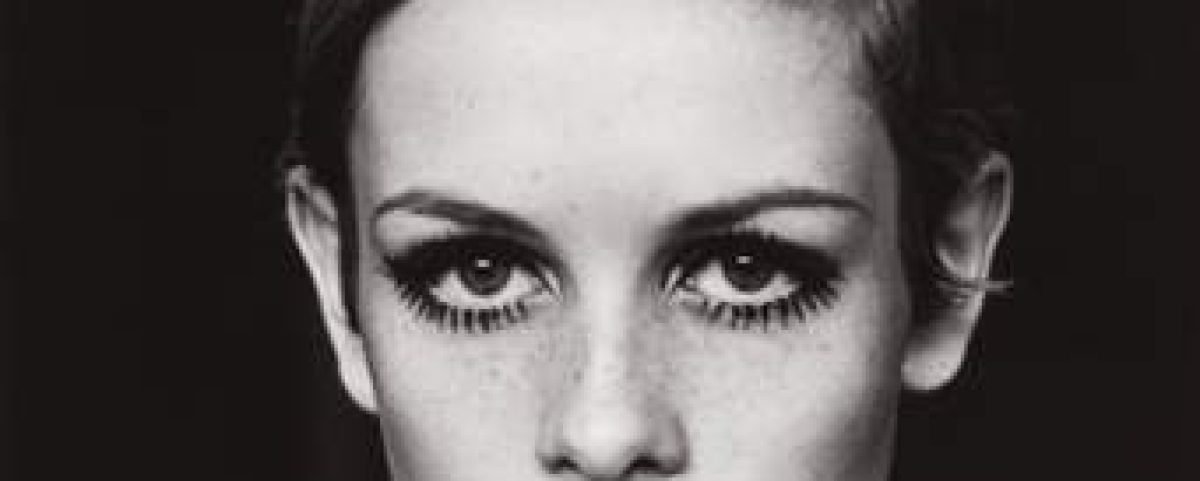
MY FATHER BROUGHT HOME A NEWSPAPER CLIPPING WITH A PICTURE OF A model who had asymmetrical hair, one side short like an undercut, the other a wide bang that drooped across her forehead and face. Big bangles dangled from her ears.
Using a ruler to make a perfectly straight cut, he had carefully torn out the article. It was about six inches long and two inches wide. “Now take a look,” he said, pointing to the British supermodel’s short skirt. “You could look like this.”
While the boys took school shop and practised using hammers and saws, we made sauces, knitted slippers and stitched gingham aprons with pockets. I could use some of those lessons now to recreate this exact outfit.
“In good design,” my father said, citing Mies van der Rohe’s minimalist chair, “each element serves a purpose, even if it’s simply to move the eye across from one point to the next.” Bearing this in mind, I accepted my father’s shopping mall credit card and purchased fabric for my first dress—a wool twill with a diagonal weave that your eyes could follow. From my left shoulder down to my right thigh, the slanted lines would lead you to the bottom m hem, about eight inches above my knee. I would wear this garment with nylon stockings, high boots, and bobble earrings that would hang from chains that swung as I walked. The department-store hairstylist studied the newspaper clipping, and I left with a lopsided hairdo—an undercut with one big bang curtaining my face.
When I showed off this new look, my father said I was a perfect supermodel, or rather supermodels looked a lot like me. I was taller and prettier.
Of course, my mother was listening.
Many marriages are mixed. Protestants wake up beside Buddhists. Jews say their vows to Catholics. Atheists pretend to be born again. Our home was mixed in another way. My parents came from different social classes. In one photo, my father is sitting on a stone fence in plus-fours beside his fiancé, who has high-heel pumps, a black pencil skirt and blonde hair, thrown back, Marilyn Munro style. His parents had arranged the union. I wished the blonde bombshell could have been related to me. Instead, my father had married my mother, and I was caught between conflicting world views.
My mother barely spoke English. (My father had brought us across the ocean, in part to avoid the shame of marrying beneath him, although she claimed it was to get away from his family, which was pretentious, vain and deceitful.) She had a nursing diploma, which didn’t qualify her to weigh in on any important subject: philosophy, science or history. And she had no idea how to cook, set a proper dinner table or dress.
Take a look at my father.
His fedora was always cleanly brushed, the felt absolutely black and flat from being struck with boar-bristles. He would place the hat over his scalp, using his two middle fingers to pull it down slightly in a striking, coy manner. His trench coat from London was the full, loose style that could successfully cover an entire suit while still exposing pant cuffs and shoes polished to such a high gloss they reminded me of well-fed black cats. (One of my mother’s tasks was to shine his Brogues.) He often left his coat neck open—a conscious choice, no doubt—to show a starched white collar held under the knot of his tie with two gold pins that once belonged to my great grandfather.
As a very small child, I would sit on the toilet while he conducted his shaving ritual, clicking on a new blade, placing the sharp rectangle on his razor, wetting his barber brush under the creaky faucet, swirling it in a small wooden bowl that balanced on the sink edge, lathering white foam over his face and rinsing with a facecloth before splashing on turquoise aftershave. He would touch a few drops to my eyelids, as though it were holy water. The gesture and glorious scent evoked images of him long after he had unpacked another white shirt, dressed in his suit and rushed out to the world. Goodbye.
No one was immune to his good looks and style. Even at six years old, I got free chocolate from the supermarket cashiers just because he was my dad. When he picked me up at the police station as a teenager after I was caught shoplifting, they let me go without any record. Anyone with a parent like that would turn out okay.
First my father brought home the newspaper clipping. A week later, I had a new outfit, and my father was calling me a supermodel. But he wasn’t just thinking about me. Yes, he was giving me confidence, but more importantly, he was taking hers away.
My appearance was a comment on my mother. I was the washcloth he could use to rub her face. He didn’t exactly plan this. It was a natural reflex. When you grow up in a large house where no one tells the truth and everyone speaks several languages, you learn to play people off against each other.
My mother fought back by demeaning me. She called me knock-kneed. My legs were not perfect specimens worthy of public exposure. They had a crooked X shape with the knees coming together in an awkward manner. A birth defect. And I was pigeon-toed. Rather than being straight and parallel, my feet pointed inwards. I had no calves. Well-formed legs have shapely muscles. Mine were toothpicks.
She wasn’t finished. I had a giant rear-end, she claimed.
“Even as a baby, you had a large backside,” she said. “Here was this child almost two feet long, all skin and bones, and then this big bum.”
Then came her final blow, aimed at both my father and me. It wasn’t a critique of any specific body part, rather an attack on character.
“Your looks won’t last forever,” she said. “One day your pretty will fade and you’ll be just like the rest of us. When that day comes, you won’t be able to rely on your appearances anymore, and you’ll wish you had developed personality.”
Jealousy justifies its own existence by inventing stories. It tells you that you’ll lose someone or something. Unmanageable rage takes over your heart. I was a child looking for praise. Instead I received insults. I couldn’t comprehend any of this that afternoon in my miniskirt. Or maybe I understood it all.
Insults descended into crying. Watching her manipulative tears, I vowed never to be like her. I didn’t say it out loud. Not all thoughts crystallize into words. Ideas can meander through us, enter our bloodstream or concentrate in a muscle, until we believe a certain thing and reject another.
I didn’t offer her sympathy. If I felt any, I was too afraid to acknowledge it. From photographs, phrases and glances, I learned that my mother was not to be my role model. This woman, with her comfortable lace-up shoes, had no style, which was an abomination.
We attended mass every Sunday. The house of god satisfied my father’s need for formality and eased his fear of our imperfections.
Here’s one Sunday memory.
In a gloved hand, my father’s holding his kid-leather prayer book. That’s what European aristocrats did with published material. Paper and cardboard covers didn’t meet their standards, so they replaced them with smooth skin and stamped the titles in gold on the front and down the spine. In the dining hall in our family home, floor-to-ceiling shelves held volumes all rebound in leather. “Don’t judge a book by its cover” is a naïve statement by people who can’t appreciate the importance of appearances.
It’s spring, almost Easter, and I am waiting gloriously in a new spring coat and a hat that has a three-inch brim covered with an assortment of cloth roses.
My mother appears in a wool tam and an old, too-tight, double-breasted, corduroy jacket. The big-square buckle is so worn the metal shows through. On her feet are the white lace-up shoes she uses to work in the garden. She knows she’s an embarrassment but is uncomfortable adhering to standards she doesn’t believe in. High heels, she says, are uncomfortable and cause her feet to swell. She already has varicose veins and needs special support hose.
To my father, she lacks discipline and puts her own needs above her family’s.
Even before his voice claims dominion over everything, I feel the agitation. We all know air breathes. Dust particles make sounds. Memories float everywhere. All these silent spirits quickly drop their invisibility cloaks when someone starts shouting, “We are not going out dressed like beggars.”
His anger makes her more fragile.
“What does it matter? Nobody looks at me,” she cries. When her tears fail to win sympathy, she turns on me.
“Go along with her. You’re not ashamed of her,” she says. And suddenly everything is my fault.
Soon my mother is on the floor, melting into the linoleum. I see her dissolving like soft ice cream until she is a puddle, the way she does on the beach when she sits in her flowered dress in the heat on the blanket.
That’s a different memory.
The air smells of salty fries dressed in ketchup and of hot dogs smothered in mustard. Along the water’s edge, a steady stream of flip-flops presses down and buries melted Popsicle juice in warm sand. Plastic swim rings with inflatable Mickey Mouse and ducky heads clamp around children’s waists. Yellow and red beach balls bounce over the waves. My father is swimming across the lake, his head bobbing up and down out in the deep-end.
His breaststroke takes him away from us. Other swimmers paddle the crawl, which he says is crude and American, makes a racket and employs unnecessary motion to propel you forward. The breaststroke is one reason my father isn’t like other men with their bellies and weak shoulders. He is as perfect as Jesus and resembles the life-sized almost naked plaster version that hangs on a crucifix behind the altar at church.
One year later, I ran for student council. The hallways displayed my campaign posters with my slogan: “There’s Cool in School.” (Scratch out the “S” and “H”: School.) I delivered my speech in fishnet stockings, Go-go boots, earrings that looked like cat’s eye marbles and a tunic copied from British Vogue. (The downtown library had a subscription.) I had stitched the latest sensation—hot pants—short shorts that showed just below the hem.
On the stage at a lectern in the school gymnasium below a basketball hoop and glaring ceiling lights protected by wire cages, I heard the applause—a racket of non-stop noise. As I left the stage, a claw pinched my right arm just above the elbow. The school principal dug her fingertips into my sleeve and pulled me ahead. We passed through side doors, down the wide hall to her office, where soon we faced each other, I in a hard chair, she in a low wing-backed lounger that made her old body look even more crumpled.
“We have rules here,” she said, “to protect the virtue of young women in our care.”
She recited the regulation: “No skirt shall fall higher than one-half inch above the middle of the knee.”
She stood, retrieved a ruler and used the wooden stick to prove that my hot pants (a full twelve inches above mid-knee) violated Catholic school code. She laid out the consequences. I was disqualified from council.
“Your behaviour has left me no choice,” she said.
Then she added: “Your appearance is distracting the male teachers and lowering the moral standard.”
At home, the verdict stunned us all. None of us could have predicted it. In Denmark, children run about naked, mothers nurse in front of strangers and only foreigners wear bathing suits. Even the famous Little Mermaid statue is naked.
Together we rummaged through my closet for something half an inch above my knee. For a moment, we almost shared the same fate. We were both losers. But for me, circumstances quickly changed.
Back at school, the Grade 9 boys had shut their textbooks and refused to work unless I was elected to council. It had something to do with my legs. I was too relieved to appreciate the irony. The principal had buckled with the slightest protest from a group of soon-to-be men. She left it to my homeroom teacher to inform me that no one would object to me fulfilling my duties.
Years later my mother was on her deathbed. (She almost died many times. This was one of those instances.) We were all called to the hospital. I can’t remember which illness was about to slay her that time, only that the room was surgical white and steel, such a contrast to her tears and touch.
“I am so sorry how I treated you as a child,” she said. I couldn’t believe what I was hearing. Until now it had all been my imagination. “You had everything I could never have,” she said.
Through sonic forces, adults convey concepts to children who, barely able to comprehend social structures, reorder their thoughts to conform to their parents’ belief systems. The child becomes a copy of the parent without knowingly accepting or rejecting any ideas. This is inheritance.
I tried to understand what it could be like to grow up without privilege. Your first breaths remind you of your poor social station. Every day is imbued with messages about caution. Don’t expect too much. Want too much. Spend too much. Even marrying my father couldn’t take away her conviction that life would soon reclaim any extras she had won. I could have consoled her, but part of me was her, and that was frightening. She had breathed her fears into me. I knew I could end up like her someday, soaking in my tears, unable to believe I deserve anything.